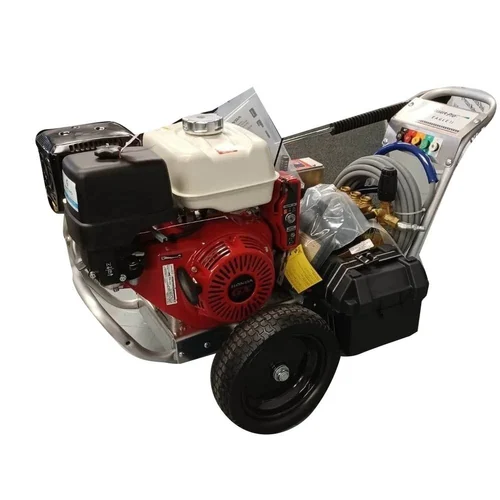
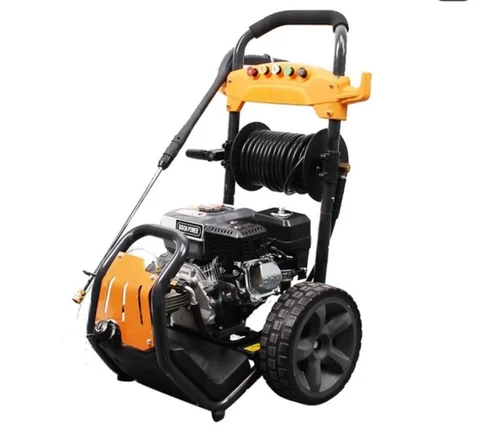
High-pressure pumps play a critical role in many industrial operations where controlled force, precision, and reliability are essential. The pressure rating of a pump directly determines its ability to perform demanding tasks such as cleaning, cutting, testing, or fluid injection. Choosing the correct pressure level is not just a performance decision, it is a safety and efficiency requirement.
Pumps rated at 200 bar and 500 bar are widely used across industries, but each serves very different operational needs. Selecting the wrong pressure can lead to energy loss, equipment damage, or unsafe working conditions. Understanding these differences helps industries achieve optimal output while maintaining long-term system reliability.
Unique Technology Enterprises offers a wide range of high-pressure pump solutions designed to meet varied industrial demands, ensuring safe operation, consistent performance, and dependable build quality.
A 200 bar pump is designed to deliver moderate to high pressure suitable for continuous industrial applications that require controlled force without extreme stress on system components. These pumps are commonly used where steady pressure and consistent flow are more important than ultra-high force.
Typically, 200 bar pumps operate efficiently within standard industrial duty cycles, offering a balance between performance, energy consumption, and maintenance requirements. They are widely used in industries such as manufacturing, cleaning systems, hydraulic operations, and process equipment.
One of the key advantages of 200 bar pumps is their cost-effectiveness and ease of maintenance, making them ideal for operations that require reliable pressure without complex system design or heavy-duty reinforcement.
A 500 bar pump is classified as a high to ultra-high-pressure pump, designed for applications that demand intense force and precise pressure control. These pumps are built to handle extreme pressure conditions and are significantly more robust in construction compared to standard industrial pumps.
500 bar pumps are commonly used in industries such as hydrostatic pressure testing, high-pressure cleaning, water jetting, cutting systems, and specialized industrial processes where lower-pressure pumps are not sufficient.
The major advantage of 500 bar pumps lies in their ability to deliver powerful output with high pressure stability, making them essential for critical and heavy-duty operations. However, they also require stronger components, advanced safety systems, and skilled handling.
| Comparison Aspect | 200 Bar Pump | 500 Bar Pump |
|---|---|---|
| Pressure Capacity & Force Output | Designed for moderate to high pressure applications where controlled force is sufficient. Suitable for operations that do not require extreme pressure. | Built for ultra-high pressure applications, delivering significantly greater force for demanding and specialized industrial tasks. |
| Flow Rate Behavior | Generally offers a higher flow rate at lower pressure, making it ideal for continuous operations requiring volume and consistency. | Prioritizes pressure over flow, resulting in lower flow rates but much higher force output. |
| Energy Consumption | More energy-efficient for long operating hours, as lower pressure reduces power demand and operating costs. | Consumes more energy due to high-pressure generation and reinforced system requirements. |
| Design & Build Strength | Robust industrial design, but lighter construction compared to ultra-high-pressure pumps. Suitable for standard industrial environments. | Heavy-duty, reinforced construction with precision-engineered components to withstand extreme internal pressure. |
| Operational Efficiency | Performs efficiently in continuous-duty cycles with minimal wear, making it reliable for daily industrial use. | Highly efficient for short to medium high-pressure operations, but not typically used for prolonged continuous running. |
| Pressure Stability & Control | Provides stable and consistent pressure suitable for routine industrial processes. | Delivers excellent pressure stability even under extreme operating conditions where precision is critical. |
| Durability & Lifespan | Long service life when operated within rated limits, with lower stress on components. | Designed for high-stress environments, but requires strict maintenance to preserve long-term durability. |
| Maintenance Requirements | Easier and more economical to maintain with standard servicing practices. | Requires specialized maintenance, skilled handling, and stricter inspection routines. |
| Safety Considerations | Lower risk due to moderate pressure levels, making it safer for general industrial use. | Requires advanced safety measures due to the risks associated with ultra-high pressure operation. |
| Cost & Investment | Lower initial cost and lower ongoing maintenance expenses, offering strong value for money. | Higher upfront cost and operating expenses due to heavy-duty design and safety systems. |
| Typical Application Suitability | Best suited for cleaning systems, hydraulic operations, manufacturing processes, and general industrial use. | Ideal for pressure testing, water jetting, cutting, and critical applications requiring extreme pressure performance. |
200 bar pumps are widely used in industries where moderate to high pressure is required without the complexity of ultra-high-pressure systems. Their balanced performance makes them suitable for continuous and cost-efficient operations.
500 bar pumps are designed for high-intensity and critical operations where extreme pressure is essential. These pumps are typically used in specialized industrial environments requiring superior force and precision.
Operating high-pressure pumps, especially at 200 bar and above, requires strict attention to safety and regulatory compliance to protect both equipment and personnel.
Choosing the right high-pressure pump ensures safety, efficiency, and long-lasting performance.
Start by considering the required pressure and flow rate, as every application has specific demands, and mismatched capacity can reduce efficiency or cause damage.
Next, evaluate the nature of your application. Light-duty cleaning or hydraulic tasks may work with moderate-pressure pumps, while heavy-duty industrial cleaning, testing, or specialized operations need higher-pressure pumps. Understanding the intensity and continuity of use is essential for optimal selection.
Also, factor in the duty cycle and operating hours. Pumps intended for continuous operation differ from those for intermittent use, and selecting accordingly reduces wear and prevents downtime.
Finally, consulting expert guidance from Unique Technology Enterprises can simplify decision-making. Their team assesses pressure requirements, application type, and operational conditions to recommend the most suitable and reliable pump solution.
Regular maintenance is key to keeping high-pressure pumps operating efficiently and safely.
Extending pump life depends on correct operation, timely servicing, and adherence to recommended pressure limits. Well-maintained pumps not only last longer but also deliver stable performance throughout their service life.
Unique Technology Enterprises is a trusted name in providing reliable high-pressure pump solutions for a wide range of industrial applications. Their pumps are engineered with robust construction and consistent performance, ensuring durability even under demanding operating conditions.
The company offers customized pump options tailored to specific pressure, flow, and application requirements, helping industries achieve optimal results without compromise. Backed by strong after-sales support, technical expertise, and dependable service, Unique Technology Enterprises stands out as a reliable partner for long-term pumping solutions.